
Avenova — DTC landing page for an FDA-cleared product
Avenova is an FDA-cleared lid and lash cleanser. It sits in an awkward spot commercially: it’s a medical product, but the people most likely to buy it aren’t thinking about their eye health. They’re thinking about their lashes.
This landing page was written to convert lash extension and strip lash wearers into daily users of a hygiene product.
The audience problem
A product like this can be sold two ways. You can talk to people who already have a diagnosis — blepharitis, chronic dryness, recurring styes — or you can talk to people whose habits are creating a problem they haven’t named yet.
The second group is much larger and much harder to reach, because they don’t think of themselves as having an eye condition. They think of themselves as having nice lashes.
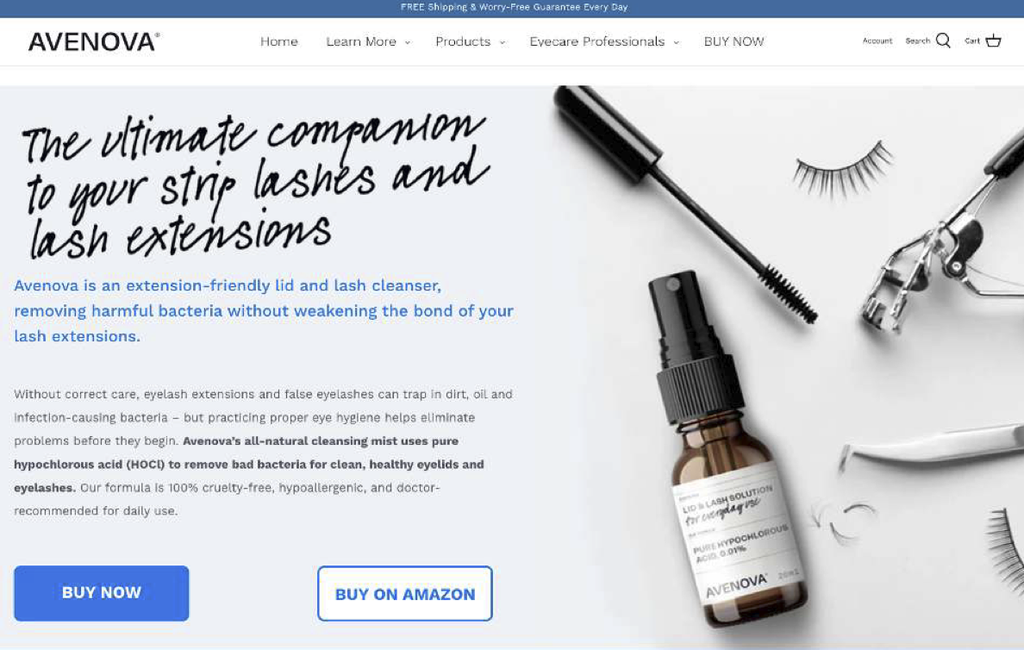
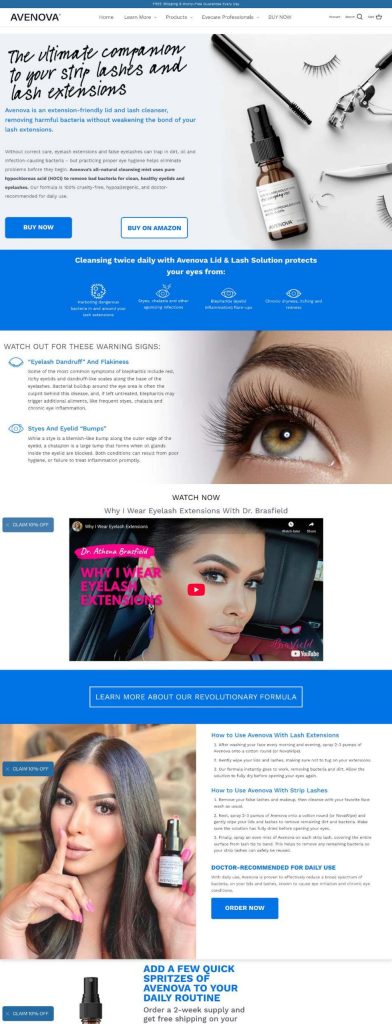
So the page opens on lashes, not on bacteria. The hero positions Avenova as the companion to extensions and strip lashes, and the first real claim is about not weakening the adhesive bond — a beauty concern, not a medical one. The medical argument comes second, once the reader has already recognized themselves.
Naming the problem in the reader’s language
The section headed “watch out for these warning signs” leads with “eyelash dandruff and flakiness” before it introduces the word blepharitis. Same condition, two vocabularies. One of them a reader recognizes from their own bathroom mirror.
That ordering is deliberate throughout the page. Symptom first, clinical term second, so the copy stays readable without giving up accuracy.
Working inside the claim constraints
This is the part that shapes everything. An FDA-cleared product can’t say whatever converts best.
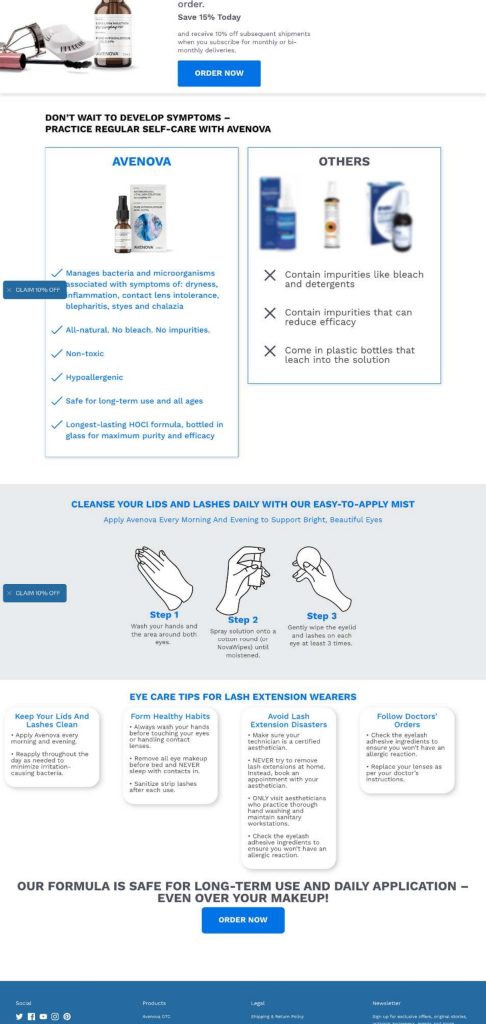
The page says the formula “manages bacteria and microorganisms associated with symptoms of” a list of conditions — not treats, not cures, not prevents. It says doctor-recommended, not doctor-prescribed. Where it gets closest to a performance claim, it’s tied to what the formula does to bacteria rather than what it does to the person.
Those are narrow lanes, and copy written inside them usually goes flat and hedgy. The work is finding phrasing that stays inside the line and still carries conviction.
Conversion structure
The rest is standard DTC architecture, which the regulated framing doesn’t get to disrupt: a comparison table against competitors, subscribe-and-save with a stated discount, repeated order CTAs at each scroll depth, and a persistent offer tab.
The how-to section splits into two paths — extensions and strip lashes — because those are different routines, and a reader who doesn’t see her own situation described will assume the product isn’t for her.
The full page
Both halves, top to bottom.
A note on this piece
Written for Avenova through an agency partner. The copy is Avenova’s; the thinking above is mine.